I realized I need around 3V and 2000mAh, but the form factor of my project limits me to a wide flat base, so this is the best I could come up with (I did see that the store has a flat LiPo 3.7V at 2400mAh and also rechargeable, but there’s a fire risk, and I’m still new to electronics to handle charging and all that, so I’d like to stick with alkaline for a bit ).
After researching a little bit I learned that there’s a risk with hooking batteries in parallel if one of the cells is the wrong way (can’t avoid all the risks I guess…), so I learned about polarity protection and using a pmos with low Rds(on) to protect one battery from being put in the wrong way.
But I’m planning to use 4 of them… Does this mean I’d need 4 pmos, one for each to protect each one? Or is it necessary to ensure safety should the end user connect one of the battery the wrong way?
With reverse protection if you start to attempt to make everything absolutely fool proof you will end up going in circles if you don’t go mad first.
You should NOT solder directly to alkaline type cells unless they have solder tabs.
You would be as well to use 2 x 2cell holders. That will minimise (or should) the possibility of reverse insertion. If the holders connect the cells in parallel just connect the holders in series. If the cells connect in series connect the holders in parallel. Easy.
I think you are going to have to give the cell inserting person some credit for common sense and the ability to interpret the little diagrams in the holder bottom. You could go on forever making everything fool proof.
You may find that the 4 AA alkaline cells do not have enough capacity. Or be marginal at best.
Cheers Bob
I guess the first question we could ask is, who is your user base? Will this be a commercial product or something you use at home?
There are holders that only allow for polarised cells (those with the cap-tip things) that will only contact if its inserted the correct way. @Robert93820 has mentioned these in the past - it might be worth searching for “polarised 18650” + “holder” on our forum or around the net to have a look.
You note the contacts fit into a sort of slot. I don’t know whether by accident or design the sides of the positive slot will allow the cell nipple to make good contact while preventing the flat negative end of the cell to make contact if inserted the wrong way. And yes a AA cell can be inserted the wrong way.
You could DIY here if needed. You need a holder with fixed pos and spring neg contacts. You could glue a couple of small plastic strips on either side of the pos contact to replicate the slot sides in the pic. Thickness is critical as it has to allow nipple contact and deny flat negative end contact. Easier if you get holders the same construction as shown.
This should take care of accidental reverse fitting protection.
Cheers Bob
At the end of the day I think to get 3V @ 2A you are going to need 2 x 18650 in parallel. Have a look at Jaycar Cat PH 9207. I think this looks similar construction to my AA holder. A bit hard to tell exactly from the pics but you can look at in store. This holder is unfortunately series connection (as is most of the holders i can find) so you would have to remove the contacts and do some modifications. I think the contacts would pull out of the slots with a bit of effort.
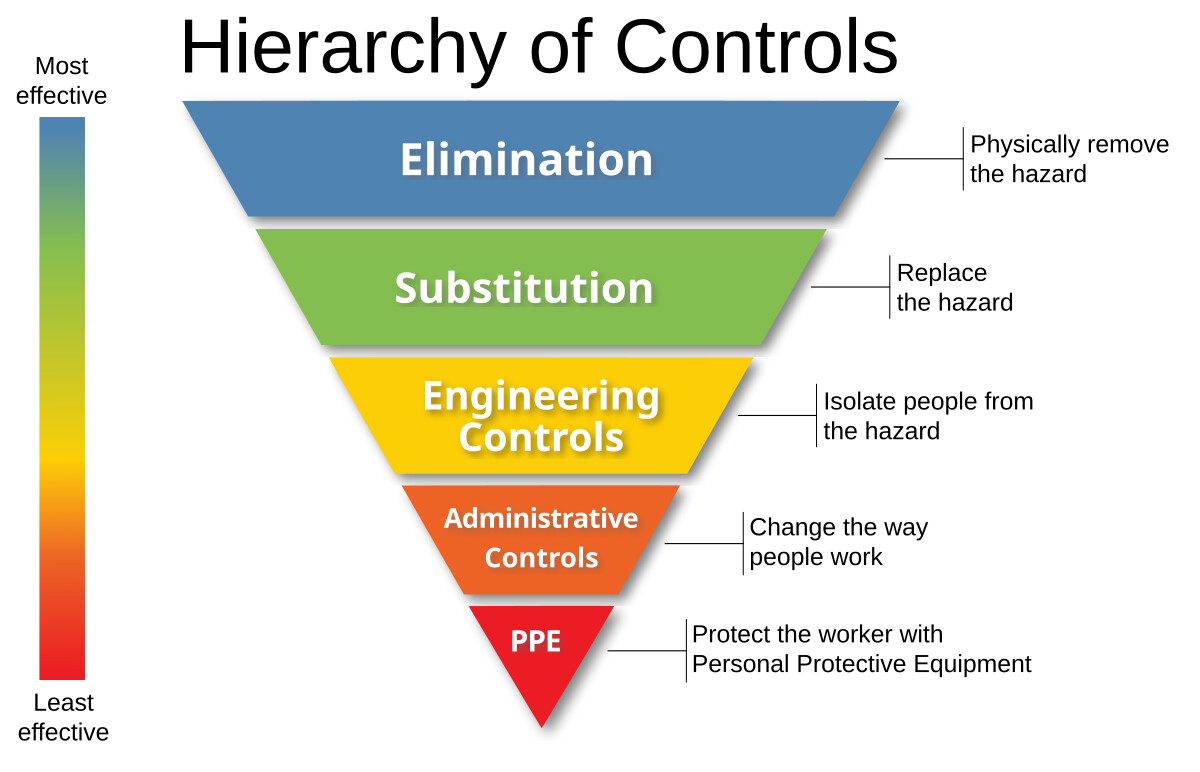
Thank you guys so much! I haven’t thought about solving the problem using something other than electrial stuffs - ie. design stuffs (I think this is layer 3 on Liam’s chart)! I’ve found the exact thing Bob was mentioning on thingiverse 18650 Battery Holder by TechsPassion - Thingiverse (it’s not for aaa but I can remix it), and I have a 3d printer to customize this however I need, so this is the perfect solution!
For context of use, it’s a toy for kids like 12+. I don’t have a lot of faith in kids (even a few adults I know . . .), so this battery holder design puts that worry at ease
Hi Khang
3D printing a holder is a great idea as the protected version of an 18650 can be up to 70mm long. They won’t fit into some commercial holders. They are still marketed as 65mm long however.
I would suggest choosing whichever cell suits and if it want a protection module in the top measure it and print up a holder to suit.
Cheers Bob
Spotted the “aaa” here so I just re read your original post.
I note you wanted to use AAA. i thought this was AA.
I think I would be safe in saying that there is no way you ate going to get 3V @ 2A out of 4 of this size. I could be wrong but even if you managed to get this current it would only be for a few minutes I reckon.
I think you might have to get over your fear of LiPo and go for 2 x 18650 in parallel. I think that 2A would be straining i cell a bit as it is getting close to 1C. those mAr capacity figures are usually quoted at the 20hr rate or 1/20C. The mAhr capacity reduces somewhat when the discharge rate increases. There are typical curves published to illustrate this. I have some around here somewhere but can’t lay my hands on them just now so you will have to look.
Cheers Bob
Hi Khang
Just had another review of your first post. and I humbly apologise for confusing the issue.
I must be going blind in old age. I feel I am missing too many little things. Like
I missed the “h” in mAh.
So Google tells us
"AI Overview
An AAA alkaline battery typically has a capacity ranging from
850 to 1,200 mAh, with common examples around 1200 mAh. The exact capacity can vary based on the manufacturer and how the battery is used, as it decreases under high discharge rates or at low temperatures."
It would appear that indeed 4 X AAA would meet your requirements but take note of the last bit of the highlighted text. Plugging your se up into the above statement you should in theory get 3V @ 1700 to 2400 mAh.
This to me would be a bit borderline considering the specs could be at the 20hr discharge rate or a discharge of mAh / 20. Whether this is suitable is up to you as we have no idea of your actual load.
If your requirement is a bit close to the wind AA might be the go.
Google says
"AI Overview
The capacity of a standard AA alkaline battery is typically
between 1,800 and 2,700 mAh, but it can be as high as 3,000 mAh or more at low drain rates. The actual capacity depends heavily on the discharge rate, with a high load reducing the overall capacity significantly."
This is about double the capacity of AAA and might suit better.
Once again I apologise to All for any confusion I have caused. I read the original statement to be “2000mA” (2A) which is vastly different.
Will just have to concentrate a bit more. I will have to use age (90 in 2 months) as an excuse.
Cheers Bob


 ).
).

 . . .), so this battery holder design puts that worry at ease