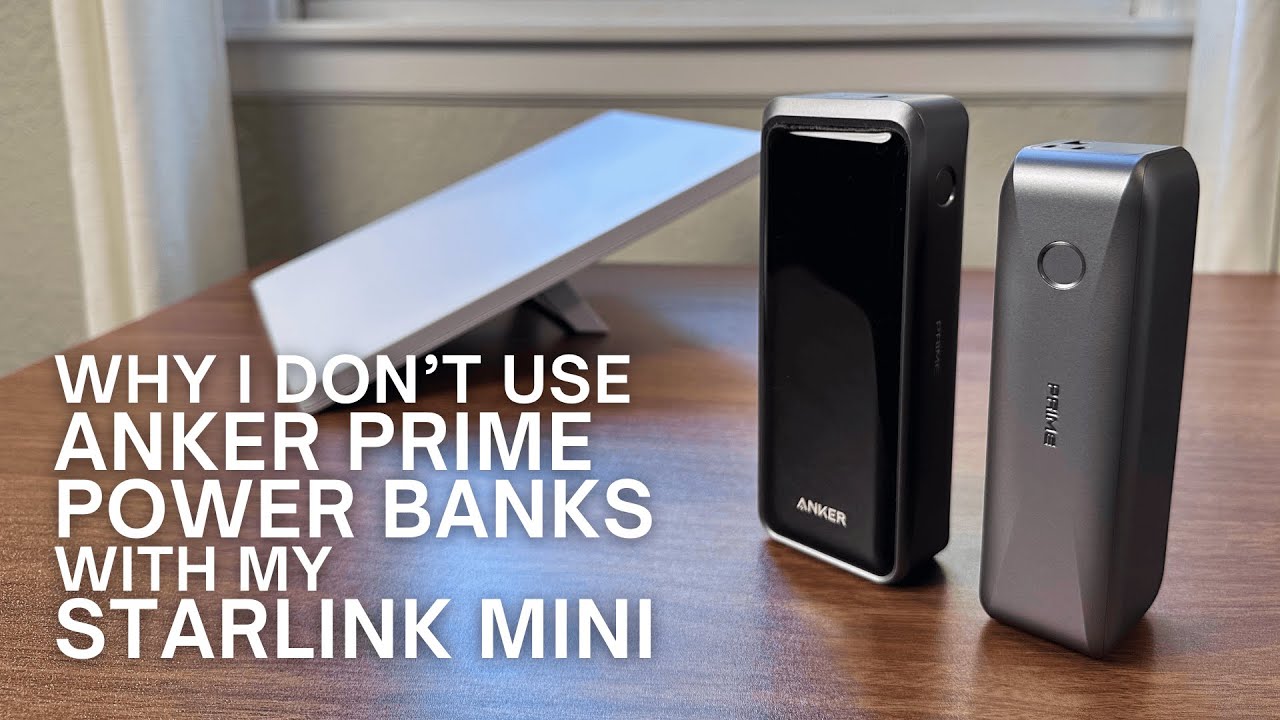
So the video of the Anker battery cutting out is what happened to me too and that process of running the Mini from the battery, that was always charging during the ride, isn’t going to work. However I have got it working with the Mini powered more directly and the battery charging also. It just means that shortly after stopping somewhere I will have to manually move the Mini to be powered by the Anker battery.
So I have the XH-M609 Low Voltage Disconnect module being powered directly from the battery. This is set to turn off its output at 12.2V now and come back on at 13V. The output goes to a cigarette lighter power outlet. In that I have plugged a car charger that has 2 USB-C and 1 USB-A outlets. The USB-C outlets are advertised as PD 3.1 140W and PD 3.0 30W.
With the Anker 220W battery plugged into the 140W outlet and trying to charge my phone on the other outlet of the Anker, it works. However, the Anker has a display that shows W in and/or out on each port. You can also see this in their app via bluetooth too. I never saw the Anker charging go above 45W. Why, I do not know. It may be that the charging protocol negotiated a lesser amount as it didn’t need more.
When it was working charging my phone, the display showed W In and Out. The Out to my phone was less than the In W, so Passthrough worked. It was indicated on the display that Passthrough was on.
So when the Starlink Mini got plugged in to the other port on the Anker instead of my phone, Initially the Mini powered up and got a Blue light, but within seconds the Power Negotations had taken place and the Mini decided it was not going to get enough power and shut down, almost. According to the Anker display it was still using 0.2W. Maybe monitoring for an increase in power ?
What does seem to work, with the bike running and stationary so far, is this way:
Run the Starlink Mini from the 140W outlet of the car charger.
Charge the Anker through the 30W outlet of the car charger.
While the bike is running the Mini runs from the bikes system. Phone, GPS, etc all have internet. Waze should work for alerts etc. DMD2 Navigation doesn’t need internet, but it has some functions that use it.
When the bike is stopped, the LVD will disconnect power currently at 12.2V and enable again at 13V to stop the battery being killed. Then plug the Mini into the Anker later when camp is ready etc and we all have wifi again for calling Family etc. Time and usage will tell just how long the Anker will last. It should be somewhere between 1-4 hours, probably 1.5 or so.
I will need a switch in the input to the LVD as it is constantly monitoring the voltage and also has its display on all the time, at least so far in my testing. It may turn the display off after a long time. But still, if it doesn’t and the bike sits for a week or two, that may be enough to drain the battery.
When I had the Mini powered from the car adaptor, i touched the 12V fuse on the input to the LVD and it was remarkably hot. The wires I have used are probably too small though.
I am back to thinking I should just get the Mini with a straight 12V - 30V booster and swap to the Anker when stopped. Just the Anker charging will be generating much less heat and draw on the bikes system.
So thank you all for your info and insights, much appreciated. When I get an eventual working system, I’ll try and remember to come back and update more.
Cheers, Col.