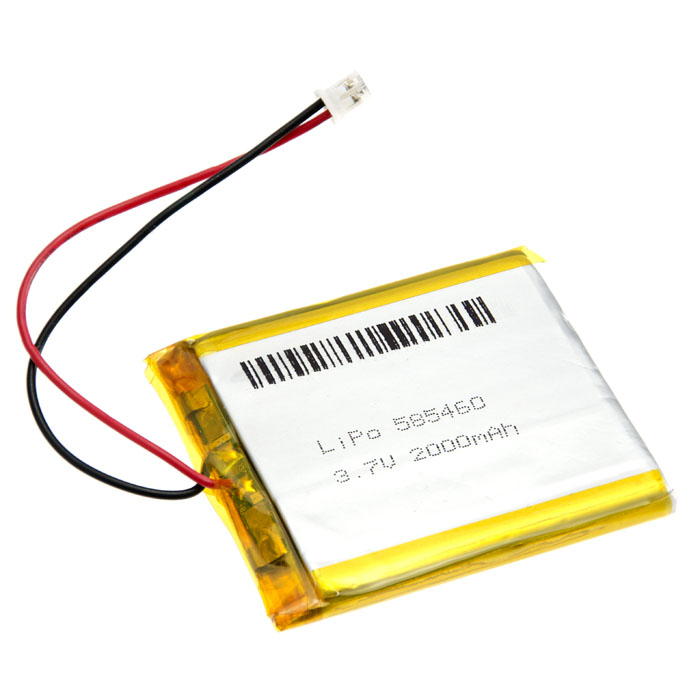
Welcome to the awesomeness that is LiPo batteries. Polymer Lithium Ion batteries offer superior energy density with this 2000mAh battery being on 5.8mm in height!
I have this battery running a soil moisture sensor in the garden. No PV, just sends data to HA on a 15m cycle and off between times. Yesterday it went offline and checking today I find the battery (not the feather) lying in 10mm of water in the weather proof case.
Dried things out and its running again.
The battery’s electronics under that clear yellow tape do not look waterproof to me so I assumed it shut itself down.
It’s not so straightforward … typical bureaucratic / marketing talk to look simple and proactive … while actually leaving people more confused about the myriad of exceptions.
You can drop of batteries to B-cycle … except mobile phone and laptop batteries. Which category do our LiPo batteries and/or powerbanks fall into ?
The EPA website is particularly strong on what you must not do … while avoiding giving much in the way of positive direction.
Hi Donald
That Service NSW site Jane linked is fairly clear.
Quote
Accepted batteries include:
standard size handheld batteries including AA, AAA, C, D, 9V, 6V and lantern batteries
button batteries used in hearing aids, remote controls and watches
standard size handheld rechargeable batteries of all chemistry types
easily removable batteries found in power tools, e-bikes and digital cameras.
End quote
Note the bit about “all chemistry types”
I note the use of “batteries” instead of “Cells”. I know it is a bit picky but a “Battery” is a combination of “cells” to make up a battery. There is a difference and use of cells and batteries in the correct terminology absolutely avoids confusion. But maybe I am flogging a dead horse here.
Maybe the individual “cells” are not as potently dangerous as a multiple cell “battery” thus the “all chemistry types”.
From the extract above I would say that LiPo individual “Cells” would be OK but if assembled into a “Battery” they are not. A Power Bank would fall into the “Battery” category
The line about power tools, E-bikes and cameras is a bit concerning. I think most power tools are NiMh while E bikes are LiPo I think that is why they are causing fire problems. My Sony camera is lithium iron.
The Service NSW site provides alternative disposal solutions.
Quote
Recycling lithium-ion and lead-acid batteries
Lithium-ion batteries such as those found in mobile phones, power banks, computers and electric bikes or scooters can be recycled if the battery is removable.
Once you have removed the battery, place clear sticky tape on the battery terminals and take them to a Community Recycling Centre.
You can take most types of batteries, including lead-acid batteries (such as car batteries), to a Household Chemical Clean Out event.
While there is some conflict and a bit of confusion I think this site is typical of most Government statements. ie; say as little while creating as much confusion as possible. While this one is not too bad there are still a couple of un-answered questions.
Cheers Bob
I went with the NSW Government link because it seemed like a good compromise between Australia-wide information (legally relevant, very unhelpful for individuals) and Newcastle Local Council (very useful if you happen to live in Newcastle and the surrounding cities, irrelevant to the populations of any other city). And neither would have been helpful for international forum users.
In reality though, it’s always going to best to check with local councils. They can usually recommend a Waste Management Plant where you can safely dispose of them.